Cognitive Enhancement and Memory Function
Human clinical trials demonstrate significant cognitive enhancement effects of Methylene Blue administration. A randomized, double-blind, placebo-controlled study published in Radiology involving 26 healthy participants aged 22-62 found that a single 280 mg oral dose of Methylene Blue increased functional MRI activity in brain regions associated with sustained attention and working memory tasks. Participants showed enhanced response in the bilateral insular cortex during sustained attention tasks and increased activity across prefrontal, parietal, and occipital cortex during memory encoding, maintenance, and retrieval phases.
Most significantly, the study demonstrated a 7% improvement in short-term memory retrieval performance compared to placebo, measured through delayed match-to-sample tasks. The enhanced memory performance correlated with increased functional connectivity in brain regions linking perception and memory functions, suggesting improved neural network efficiency underlying cognitive processes.
Additional human research examining fear extinction and contextual memory found that Methylene Blue administration following exposure therapy improved memory consolidation. Participants receiving Methylene Blue demonstrated superior retention of contextual details presented during treatment sessions one month post-intervention, indicating enhanced long-term memory formation independent of the primary therapeutic effect.
Studies on functional connectivity reveal that Methylene Blue modulates resting-state neural networks, promoting task-induced deactivation of the default mode network—a pattern associated with improved cognitive performance and observed with other cognitive-enhancing compounds. The compound reduces cerebral blood flow in specific task-related networks while simultaneously increasing oxygen utilization efficiency, suggesting improved metabolic coupling between neural activity and energy supply.
Sources:
- Rodriguez P, et al. "Multimodal Randomized Functional MR Imaging of the Effects of Methylene Blue in the Human Brain." Radiology. 2016;281(2):516-526. https://pmc.ncbi.nlm.nih.gov/articles/PMC5084971/
- Telch MJ, et al. "Effects of post-session administration of methylene blue on fear extinction and contextual memory in adults with claustrophobia." American Journal of Psychiatry. 2014;171(10):1091-1098.
- Wrubel KM, et al. "The brain metabolic enhancer methylene blue improves discrimination learning in rats." Pharmacology, Biochemistry, and Behavior. 2007;86(4):712-717.
Neuroprotection and Brain Health
Research demonstrates robust neuroprotective effects of Methylene Blue across multiple models of neurological injury and degeneration. In animal models of ischemic stroke, Methylene Blue administration significantly reduced infarct volume, improved functional outcomes, and enhanced neurological recovery. The compound protects neurons during acute injury by maintaining mitochondrial function, reducing oxidative damage, and preventing apoptotic cell death pathways.
Studies in traumatic brain injury models show Methylene Blue mitigates both primary and secondary injury mechanisms. The compound reduces brain edema, decreases oxidative stress markers, and preserves blood-brain barrier integrity following trauma. When combined with hypothermia therapy, Methylene Blue demonstrates synergistic neuroprotective effects, potentially enhancing therapeutic outcomes in clinical trauma management.
In neurodegenerative disease models including Alzheimer's and Parkinson's disease, Methylene Blue exhibits multiple protective mechanisms. The compound inhibits tau protein aggregation, reduces beta-amyloid accumulation, and decreases neuroinflammation—all key pathological features of Alzheimer's disease. Research shows Methylene Blue upregulates Nrf2-mediated antioxidant pathways in neurons, providing sustained protection against oxidative damage that contributes to neurodegeneration.
Clinical studies in surgical patients demonstrate that Methylene Blue administration significantly reduces postoperative cognitive dysfunction and delirium. In one randomized trial, patients receiving 2 mg/kg Methylene Blue showed a 24% reduction in postoperative delirium compared to controls, and early postoperative cognitive dysfunction decreased from 40.2% to 16.1%, indicating substantial neuroprotective effects during perioperative stress.
Sources:
- Rojas JC, et al. "Neuroprotective effects of near-infrared light in an in vivo model of mitochondrial optic neuropathy." Journal of Neuroscience. 2008;28(50):13511-13521.
- Tucker D, et al. "From Mitochondrial Function to Neuroprotection-an Emerging Role for Methylene Blue." Molecular Neurobiology. 2018;55(6):5137-5153. https://pmc.ncbi.nlm.nih.gov/articles/PMC5826781/
- Gonzalez-Lima F, et al. "Mitochondrial respiration as a target for neuroprotection and cognitive enhancement." Biochemical Pharmacology. 2014;88(4):584-593.
- Deng Y, et al. "Methylene blue reduces incidence of early postoperative cognitive disorders in elderly patients undergoing major non-cardiac surgery: An open-label randomized controlled clinical trial." Journal of Clinical Anesthesia. 2021;68:110108.
Cellular Senescence and Anti-Aging
Methylene Blue demonstrates potent anti-senescence effects through multiple cellular mechanisms. Research published in The FASEB Journal shows that Methylene Blue treatment increases mitochondrial complex IV activity by 30%, enhances cellular oxygen consumption by 37-70%, and reverses premature senescence induced by oxidative stress from hydrogen peroxide or heavy metal exposure. The compound extends the replicative lifespan of human fibroblasts by delaying cellular senescence, with treated cells maintaining proliferative capacity for significantly longer periods than untreated controls.
Studies reveal Methylene Blue transiently increases the NAD/NADH ratio and activates AMPK signaling, triggering downstream induction of PGC-1α and SURF1—critical regulators of mitochondrial biogenesis. This activation cascade results in more than 100% increase in complex IV activity and a 28% reduction in cellular oxidants. Telomere erosion rate, a key marker of cellular aging, decreases significantly in Methylene Blue-treated cells, indicating reduced biological aging at the chromosomal level.
Comparative studies demonstrate Methylene Blue outperforms common antioxidants including vitamin C, vitamin A (retinol), N-acetyl cysteine (NAC), and mitochondrial-targeted antioxidants like MitoQ and MitoTEMPO in stimulating cell proliferation and delaying senescence markers. Treated fibroblasts show reduced expression of p16, a biomarker of physiological aging, and decreased senescence-associated β-galactosidase activity across multiple cell lines.
Research on aging in animal models shows that Methylene Blue included in food extended lifespan in female mice by 6%. Late-life initiated treatment beginning at 18-23 months of age still produced significant improvements in physical capacity and healthspan markers, demonstrating therapeutic potential even when intervention begins in advanced age. The compound's ability to activate both energy metabolism pathways (AMPK/PGC-1α) and cellular defense mechanisms (Keap1/Nrf2) provides comprehensive protection against age-related cellular dysfunction.
Sources:
- Atamna H, et al. "Methylene blue delays cellular senescence and enhances key mitochondrial biochemical pathways." The FASEB Journal. 2008;22(3):703-712. https://pubmed.ncbi.nlm.nih.gov/17928358/
- Atamna H, et al. "Combined activation of the energy and cellular-defense pathways may explain the potent anti-senescence activity of methylene blue." Redox Biology. 2015;6:426-435. https://pmc.ncbi.nlm.nih.gov/articles/PMC4588422/
- Harrison DE, et al. "Acarbose, 17-α-estradiol, and nordihydroguaiaretic acid extend mouse lifespan preferentially in males." Aging Cell. 2014;13(2):273-282.
Skin Health and Wound Healing
Research demonstrates that Methylene Blue significantly enhances wound healing and tissue repair through multiple mechanisms. Clinical case studies show Methylene Blue-mediated photodynamic therapy produces substantial wound size reduction in chronic wounds with low healing potential, including diabetic foot ulcers, venous leg ulcers, and pressure ulcers. One patient with a chronic wound measuring 248.9 cm² experienced reduction to 20.8 cm² over a two-year treatment period, accompanied by decreased infection markers and improved granulation tissue formation.
Animal studies reveal Methylene Blue treatment accelerates wound closure by promoting re-epithelialization, increasing collagen deposition, and enhancing angiogenesis. Histological examination shows treated wounds exhibit improved tissue granulation scores, reduced inflammation, and faster progression through healing phases compared to untreated controls. The compound's antimicrobial properties contribute to healing by reducing bacterial load in chronic wounds, including methicillin-resistant Staphylococcus aureus (MRSA) and Pseudomonas aeruginosa.
Studies on skin aging demonstrate Methylene Blue's anti-aging properties in dermal tissue. Research published in Scientific Reports shows the compound stimulates fibroblast proliferation more effectively than commonly used skincare antioxidants, while significantly delaying cellular senescence. Methylene Blue treatment upregulates elastin expression and increases collagen 2A1 synthesis, improving skin structural integrity. The compound inhibits matrix metalloproteinase-9 (MMP9) expression, reducing collagen degradation in the extracellular matrix.
Three-dimensional human skin models treated with Methylene Blue show increased skin thickness and improved hydration levels compared to controls. The compound upregulates insulin-like growth factor 1 (IGF-1), which stimulates collagen production and inhibits degradation. Treated skin exhibits reduced reactive oxygen species levels, decreased expression of aging markers including p16, and improved mitochondrial function in dermal fibroblasts. Gene expression analysis reveals Methylene Blue activates DNA damage response and repair pathways, supporting tissue regeneration and cellular renewal.
Sources:
- Woo KY, et al. "A prospective evaluation of methylene blue and gentian violet dressing for management of chronic wounds with local infection." International Wound Journal. 2017;14(6):1029-1035. https://onlinelibrary.wiley.com/doi/full/10.1111/iwj.12753
- Abdelhalim AA, et al. "Evaluation of topical methylene blue nanoemulsion for wound healing in diabetic mice." Pharmaceutical Development and Technology. 2023;28(10):1021-1032.
- Xiong ZM, et al. "Anti-Aging Potentials of Methylene Blue for Human Skin Longevity." Scientific Reports. 2017;7:2475. https://www.nature.com/articles/s41598-017-02419-3
- Al-Kuraishy HM, et al. "Photodynamic therapy mediated by methylene blue-loaded PEG accelerates skin mouse wound healing: an immune response." Lasers in Medical Science. 2024;39(1):129. https://pmc.ncbi.nlm.nih.gov/articles/PMC11129982/
Mitochondrial Function and Energy Production
Methylene Blue's primary mechanism of action centers on mitochondrial enhancement, functioning as an alternative electron carrier in the electron transport chain. Research shows the compound accepts electrons from NADH at Complex I and donates them to cytochrome c, bypassing Complexes I and III where electron leakage typically generates harmful reactive oxygen species. This rerouting mechanism increases mitochondrial respiration efficiency while simultaneously reducing oxidative stress.
Studies demonstrate Methylene Blue treatment produces a 30-70% increase in cellular oxygen consumption, directly translating to enhanced ATP production. The compound increases cytochrome oxidase (Complex IV) activity by approximately 30%, improving the terminal step of oxidative phosphorylation where oxygen is converted to water. This enhancement in Complex IV function is particularly significant because cytochrome oxidase activity declines with aging and neurodegenerative disease, contributing to energy deficits in affected tissues.
Research reveals Methylene Blue stimulates heme synthesis, providing essential cofactors for electron transport chain function. The increased heme availability supports enhanced mitochondrial enzyme activities and improves overall respiratory capacity. Studies show Methylene Blue-treated cells exhibit elevated ATP levels and improved energy metabolism even under conditions of metabolic stress, such as hypoxia or inhibition of mitochondrial function.
The compound's effects on mitochondrial biogenesis extend beyond immediate functional improvements. Methylene Blue activates AMPK signaling, which in turn stimulates PGC-1α expression—the master regulator of mitochondrial biogenesis. This cascade leads to increased mitochondrial mass, enhanced oxidative capacity, and improved cellular resilience to energy demands. Long-term Methylene Blue treatment results in sustained improvements in mitochondrial function, with benefits persisting even after treatment discontinuation due to the increased mitochondrial population.
Sources:
Oxidative Stress Reduction and Antioxidant Effects
Methylene Blue demonstrates exceptional antioxidant properties through multiple mechanisms beyond its electron transport enhancement. The compound activates the Nrf2/ARE pathway, a master regulator of cellular antioxidant defense systems. Research shows Methylene Blue treatment significantly increases Nrf2 protein expression in multiple cell types, leading to upregulation of phase-2 antioxidant enzymes including glutathione S-transferase, NAD(P)H quinone oxidoreductase, and heme oxygenase-1.
Studies reveal Methylene Blue reduces mitochondrial superoxide production by 28-40% through its electron cycling mechanism. By bypassing electron leakage points at Complex I and Complex III, the compound prevents the formation of reactive oxygen species at their primary cellular source. This preventive mechanism proves more effective than scavenging approaches that neutralize ROS after formation.
Comparative antioxidant studies demonstrate Methylene Blue outperforms traditional antioxidants in protecting cells from oxidative damage. In head-to-head comparisons with N-acetyl cysteine, MitoQ, and MitoTEMPO, Methylene Blue showed superior reduction in cellular ROS levels and greater preservation of cell viability under oxidative stress conditions. The compound's unique ability to function both as an electron carrier and antioxidant activator provides multilayered protection against oxidative cellular damage.
Research in disease models shows Methylene Blue's antioxidant effects translate to functional benefits. In cardiac tissue from type 2 diabetic animals, Methylene Blue treatment restored mitochondrial respiration, increased ATP production, and lowered oxidative stress markers. Studies in inflammatory conditions demonstrate the compound reduces pro-inflammatory cytokines including IL-6, TNF-α, and IL-1β, partially through reduction of oxidative stress that drives inflammatory signaling pathways.
Sources:
- Stack C, et al. "Methylene blue upregulates Nrf2/ARE genes and prevents tau-related neurotoxicity." Human Molecular Genetics. 2014;23(14):3716-3732.
- Xue H, et al. "The Potentials of Methylene Blue as an Anti-Aging Drug." Cells. 2021;10(12):3379. https://pmc.ncbi.nlm.nih.gov/articles/PMC8699482/
- Pham T, et al. "Mitochondria-derived peptide MOTS-c restores mitochondrial respiration in type 2 diabetic heart." Frontiers in Physiology. 2025;16:1602271.
Disclaimer: The research articles listed above are for informational purposes only.
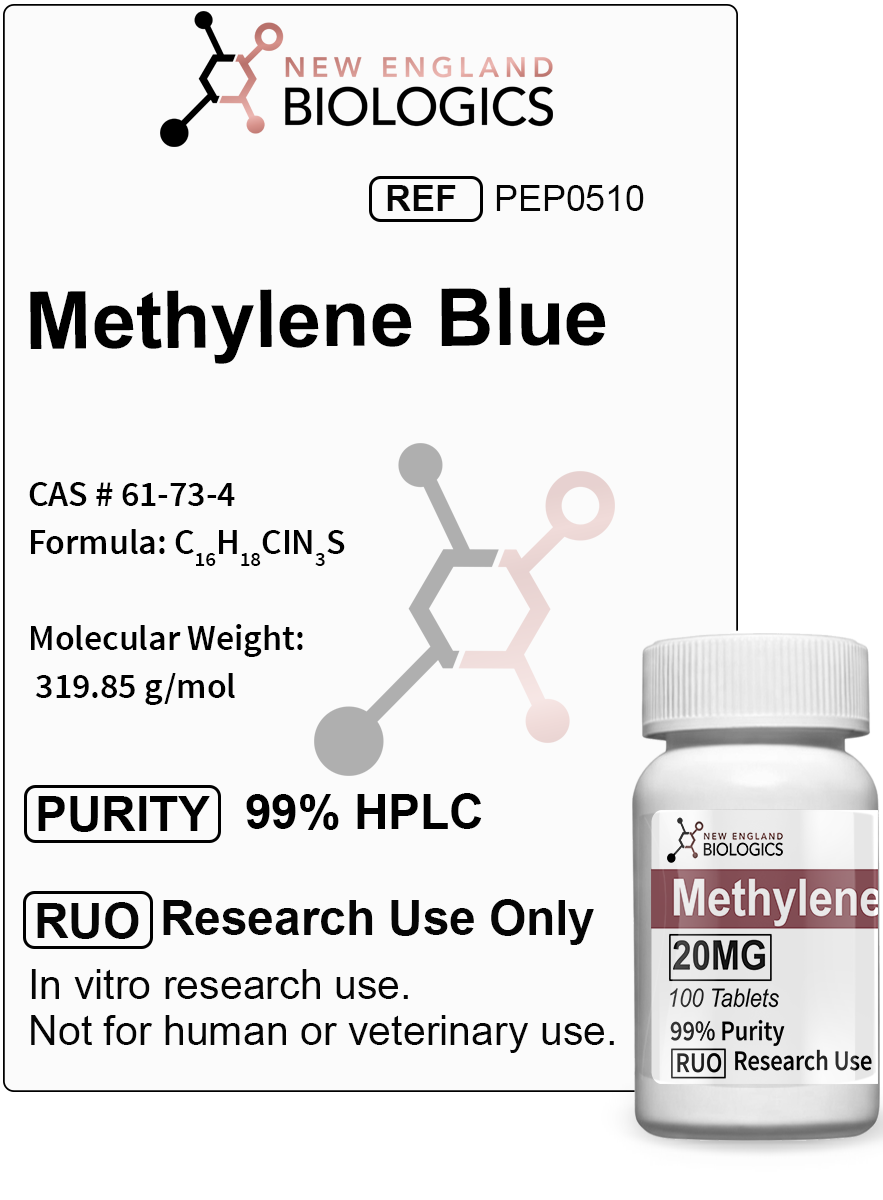
This product is intended for research use only and not for human or veterinary use.