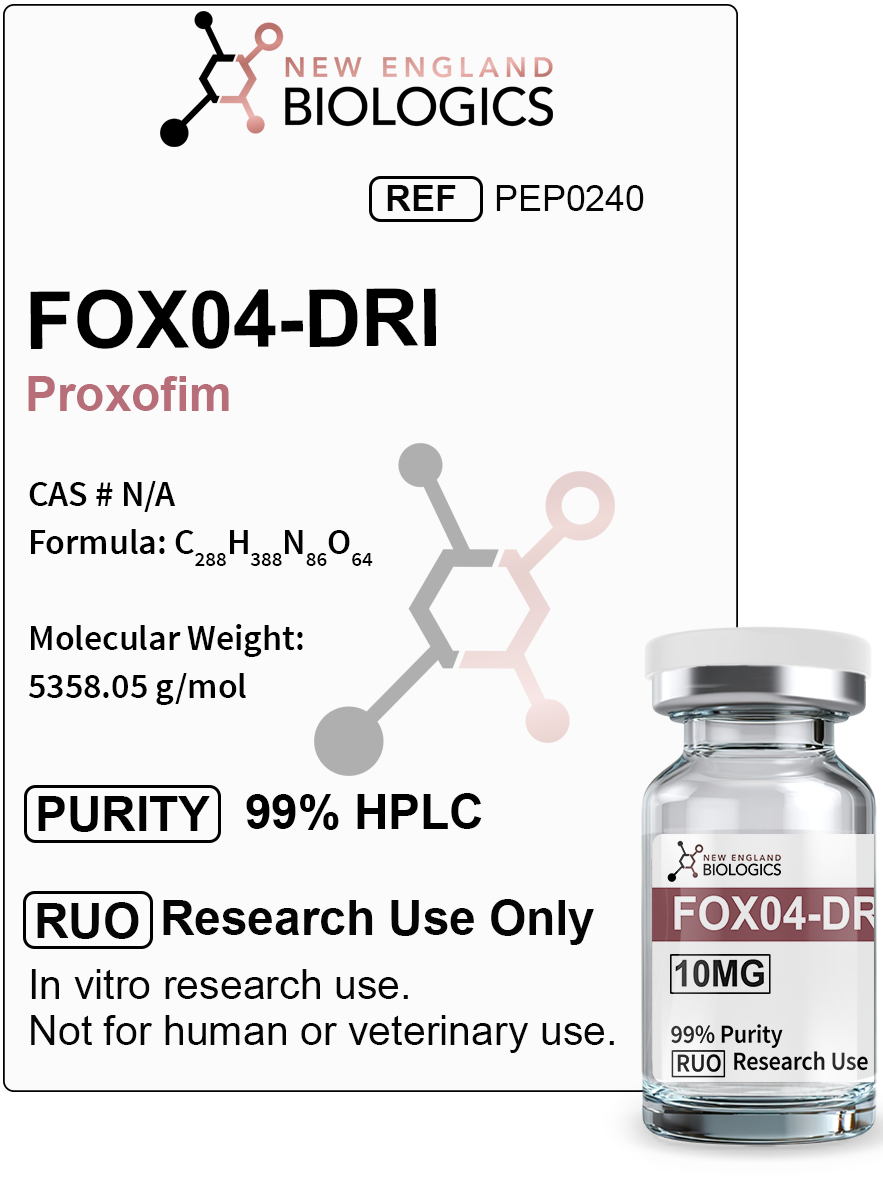
Aging Reversal and Healthspan Extension
FOXO4-DRI demonstrates remarkable efficacy in reversing multiple hallmarks of aging and extending healthspan in preclinical models. Research published in Cell shows that treatment of naturally aged mice with FOXO4-DRI significantly improved physical performance, with treated animals running approximately double the distance on voluntary running wheels compared to untreated age-matched counterparts. The peptide restored tissue homeostasis even after significant age-related decline had occurred, effectively extending healthspan rather than merely delaying aging onset.
Studies in fast-aging XpdTTD/TTD mouse models reveal comprehensive rejuvenation effects following FOXO4-DRI administration. Within 10 days of treatment, aged mice demonstrated visible restoration of fur density, recovery from the patchy hair loss characteristic of advanced aging. Behavioral assessments showed treated animals became notably more active and responsive to environmental stimuli, exhibiting exploratory behaviors typically absent in aged subjects. Quantitative measurements confirmed these observations, with FOXO4-DRI treatment significantly increasing voluntary running wheel activity in aged mice.
The mechanism underlying these rejuvenating effects involves selective clearance of senescent cells expressing high levels of SASP factors. By eliminating these dysfunctional cells, FOXO4-DRI reduces chronic inflammation, improves tissue microenvironment, and allows remaining healthy cells and stem cell populations to function optimally. Long-term studies demonstrate sustained improvements in physical capacity and metabolic function following senescent cell clearance, suggesting FOXO4-DRI treatment can fundamentally alter aging trajectories.
Sources:
Kidney Function Restoration and Renal Protection
FOXO4-DRI demonstrates profound effects on restoring renal function in aged subjects through selective elimination of senescent tubular cells. Research shows that both naturally aged wildtype mice and fast-aging XpdTTD/TTD mice develop progressive kidney dysfunction characterized by elevated plasma urea and creatinine levels, established biomarkers of reduced glomerular filtration capacity. Treatment with FOXO4-DRI normalized these metabolic indicators, effectively restoring kidney filtering capacity to levels approaching those of young animals.
Histological analysis reveals that aged kidneys accumulate senescent cells primarily in tubular regions, identified by loss of Lamin B1 (LMNB1), elevated senescence-associated β-galactosidase activity, and expression of inflammatory IL-6. FOXO4-DRI treatment significantly reduced the percentage of tubular cells lacking LMNB1, decreased IL-6 expression, and improved overall renal architecture. The peptide's efficacy against high-SASP senescent cells proves particularly valuable in the kidney microenvironment, where inflammatory signaling from senescent tubular cells impairs filtration and promotes fibrosis.
Studies demonstrate FOXO4-DRI achieves comparable renal function restoration to genetic clearance of senescent cells using the p16-3MR suicide gene system, confirming that therapeutic effects result specifically from senescent cell elimination rather than off-target actions. Treatment did not adversely affect kidney weight or overall organ architecture, indicating selective targeting without compromising healthy renal tissue. Ex vivo studies using aged kidney slices show FOXO4-DRI induces apoptosis in senescent cells within 3 days, demonstrating direct renal tissue penetration and efficacy.
Sources:
Pulmonary Fibrosis Reduction and Lung Tissue Repair
FOXO4-DRI shows significant therapeutic potential for pulmonary fibrosis, a progressive and often fatal lung disease characterized by excessive scarring and collagen deposition. Research in bleomycin-induced pulmonary fibrosis models demonstrates that FOXO4-DRI treatment leads to substantially milder pathological changes and reduced collagen accumulation compared to untreated controls. The peptide works by targeting senescent myofibroblasts, cells primarily responsible for excessive extracellular matrix production in fibrotic disease.
Studies published in the Journal of Cellular and Molecular Medicine reveal FOXO4-DRI ameliorates bleomycin-induced lung damage through multiple mechanisms. The peptide reduces myofibroblast differentiation by downregulating α-smooth muscle actin (α-SMA) and collagen type I alpha 1 (Col1a1) expression, key markers of activated fibroblasts. RNA sequencing and pathway enrichment analysis show FOXO4-DRI significantly downregulates extracellular matrix-receptor interaction pathways, including fibronectin (Fn1), tenascin C (Tnc), and thrombospondin 2 (Thbs2), all critical components of fibrotic tissue architecture.
The senolytic demonstrates preferential elimination of transforming growth factor-β (TGF-β)-induced myofibroblasts while sparing normal fibroblasts, showing selectivity for pathological senescent cells driving fibrosis. Treatment with FOXO4-DRI reduces hydroxyproline content in lung tissue, a direct measure of collagen deposition, and improves lung histology assessed by hematoxylin-eosin and Masson trichrome staining. Importantly, FOXO4-DRI achieves these effects with favorable treatment kinetics compared to approved medications like pirfenidone, suggesting potential for more efficient therapeutic intervention.
Sources:
- Han X, et al. "FOXO4 peptide targets myofibroblast ameliorates bleomycin-induced pulmonary fibrosis in mice through ECM-receptor interaction pathway." Journal of Cellular and Molecular Medicine. 2022;26(11):3269-3280. https://pmc.ncbi.nlm.nih.gov/articles/PMC9170815/
Cartilage Regeneration and Joint Health
FOXO4-DRI enhances cartilage quality and regenerative potential in autologous chondrocyte implantation (ACI), a therapeutic procedure for treating articular cartilage injuries. Research demonstrates that in vitro expansion of chondrocytes—a necessary step in ACI—generates senescent cells that adversely affect cartilage formation quality and quantity. Treatment with FOXO4-DRI selectively removes these senescent chondrocytes, significantly improving the therapeutic potential of expanded cell populations.
Studies show FOXO4-DRI treatment reduces senescent cell markers including p16, p21, and senescence-associated β-galactosidase activity by over 50% in expanded human chondrocytes at population doubling level 9 (PDL9), the stage typically used for clinical implantation. Functional assessments reveal cartilage generated by FOXO4-DRI-pretreated chondrocytes displays significantly lower senescence levels compared to cartilage from untreated cells. This reduction in senescent cell burden within regenerated cartilage tissue suggests improved long-term stability and reduced risk of post-traumatic osteoarthritis development.
The peptide's mechanism involves disrupting the FOXO4-p53 interaction specifically in replication-stressed senescent chondrocytes, triggering selective apoptosis while preserving healthy proliferative cells needed for cartilage formation. This selectivity proves critical for ACI applications, where maintaining viable cell numbers remains essential for therapeutic success. Research indicates FOXO4-DRI treatment does not compromise the chondrogenic capacity of retained cells, though additional interventions may enhance cartilage matrix production following senescent cell clearance.
Sources:
Testosterone Production and Hormonal Restoration
FOXO4-DRI demonstrates capacity to restore testosterone production in aged subjects by targeting senescent Leydig cells in testicular tissue. Research published in Aging shows that male late-onset hypogonadism, an age-related decline in testosterone secretion, correlates with dysfunction and accumulation of senescent Leydig cells in testes. Studies reveal FOXO4 expression becomes specifically elevated and translocates to the nucleus in Leydig cells of elderly men, a pattern associated with decreased testosterone synthesis.
Animal studies in naturally aged mice demonstrate FOXO4-DRI treatment improves the testicular microenvironment and alleviates age-related testosterone insufficiency. The peptide selectively induces p53 nuclear exclusion and apoptosis in hydrogen peroxide-induced senescent Leydig cells in vitro, confirming direct cellular targeting. In vivo administration significantly increases serum testosterone levels in aged mice, accompanied by elevated expression of key testosterone synthesis enzymes including 3β-HSD and CYP11A1.
The mechanism involves clearance of senescent Leydig cells that secrete pro-inflammatory SASP factors (IL-1β, IL-6, TGF-β) which impair testosterone production in neighboring healthy cells. FOXO4-DRI treatment reduces these inflammatory markers in testicular tissue, creating a more favorable environment for normal hormonal function. Notably, the peptide does not affect viability of normal Leydig cells, demonstrating selectivity for senescent populations. This targeted approach offers potential advantages over traditional testosterone replacement therapy by addressing root causes of age-related hormonal decline rather than simply supplementing exogenous hormones.
Sources:
Chemotherapy Protection and Toxicity Reduction
FOXO4-DRI effectively neutralizes chemotherapy-induced tissue damage by clearing therapy-induced senescent cells. Research demonstrates that doxorubicin, a common chemotherapeutic agent, induces widespread cellular senescence in addition to its anti-cancer effects, contributing to severe off-target toxicity and long-term health complications in cancer survivors. Studies show sequential treatment with FOXO4-DRI following doxorubicin exposure prevents accumulation of senescent cells and mitigates chemotoxicity without compromising the anti-tumor effects of chemotherapy.
Animal studies reveal doxorubicin administration causes dramatic weight loss and liver damage, evidenced by elevated plasma aspartate aminotransferase (AST) levels, an established marker of hepatotoxicity. Treatment with FOXO4-DRI following chemotherapy exposure potently counteracts these effects, normalizing body weight and reducing plasma AST to near-baseline levels. Histological analysis shows FOXO4-DRI eliminates FOXO4-positive senescent cells and reduces IL-6 expression in liver tissue, indicating resolution of chemotherapy-induced inflammatory damage.
Critically, FOXO4-DRI does not predispose healthy cells to DNA damage or sensitize normal tissues to chemotherapy when administered prior to or during treatment. The peptide selectively targets cells that have already undergone senescence as a consequence of earlier chemotherapy exposure, demonstrating a favorable safety profile for potential clinical application. Studies using genetic senescent cell clearance confirm that therapeutic benefits result specifically from senescence elimination rather than alternative mechanisms, validating FOXO4-DRI's senolytic activity in the context of chemotoxicity.
Sources:
Keloid and Fibrotic Scar Reduction
FOXO4-DRI shows therapeutic potential for keloid treatment by targeting senescent fibroblasts that maintain the inflammatory microenvironment driving keloid overgrowth and recurrence. Research published in Communications Biology reveals keloids exhibit increased proportions of pro-inflammatory and mesenchymal fibroblast subpopulations with elevated senescent cell markers. Single-cell RNA sequencing analysis identifies enhanced expression of senescence-associated secretory phenotype genes, elevated p16 protein levels, and increased β-galactosidase-positive cells in keloid tissue compared to normal skin.
Studies demonstrate keloids show upregulated p53-serine 15 phosphorylation (p53-pS15), identified through phosphospecific protein microarray and western blotting analysis. This phosphorylated p53 maintains senescent cell viability by preventing apoptosis. FOXO4-DRI disrupts this survival mechanism, promoting apoptosis and decreasing G0/G1 phase cells in pro-senescence models of keloid organ cultures and isolated fibroblasts. Treatment induces p53-pS15 nuclear exclusion, triggering the apoptotic cascade specifically in senescent fibroblasts while sparing healthy cells.
The research indicates upregulation of p53-pS15 and p16 maintains a persistent senescent microenvironment that promotes cell cycle arrest and apoptosis resistance in keloid fibroblasts, perpetuating pathological scar formation. By eliminating these senescent cells, FOXO4-DRI alleviates the inflammatory microenvironment and shows potential to prevent the tumor-like aggressiveness and high recurrence rate characteristic of keloids. This targeted senolytic approach addresses root causes of keloid pathology rather than merely managing symptoms.
Sources:
Disclaimer: The research articles listed above are for informational purposes only.
This product is intended for research use only and not for human or veterinary use.