Tendon and Ligament Repair
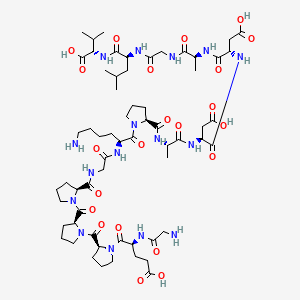
BPC-157 and TB-500 demonstrate significant efficacy in accelerating tendon and ligament healing, tissues that typically heal slowly due to limited vascular supply. Research shows BPC-157 promotes healing through multiple mechanisms including enhanced collagen synthesis, improved tensile strength, and accelerated cellular proliferation in tendon fibroblasts. Studies demonstrate BPC-157 increases growth hormone receptor expression in these cells, amplifying their regenerative capacity and extending functional lifespan.
Animal models of Achilles tendon injury show BPC-157 treatment significantly improves recovery as evidenced by biochemical markers and microscopic observations. Biomechanically, treated tendons demonstrate increased load to failure and significantly higher functionality as measured by the Achilles Functional Index over 14 days. The peptide's ability to enhance angiogenesis proves particularly valuable in poorly vascularized tissues like tendons, where limited blood supply typically impedes healing.
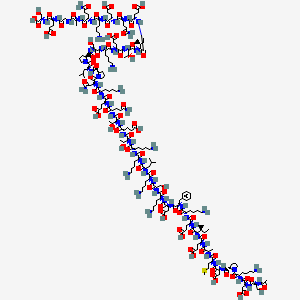
TB-500 complements these effects through its promotion of cellular migration to injury sites. Studies show thymosin beta-4 accelerates wound healing by increasing reepithelialization by 42% at 4 days and 61% at 7 days post-injury, with treated wounds also contracting at least 11% more than controls. The peptide stimulates keratinocyte migration 2-3-fold over baseline when as little as 10 picograms is applied, demonstrating potent effects even at minimal concentrations.
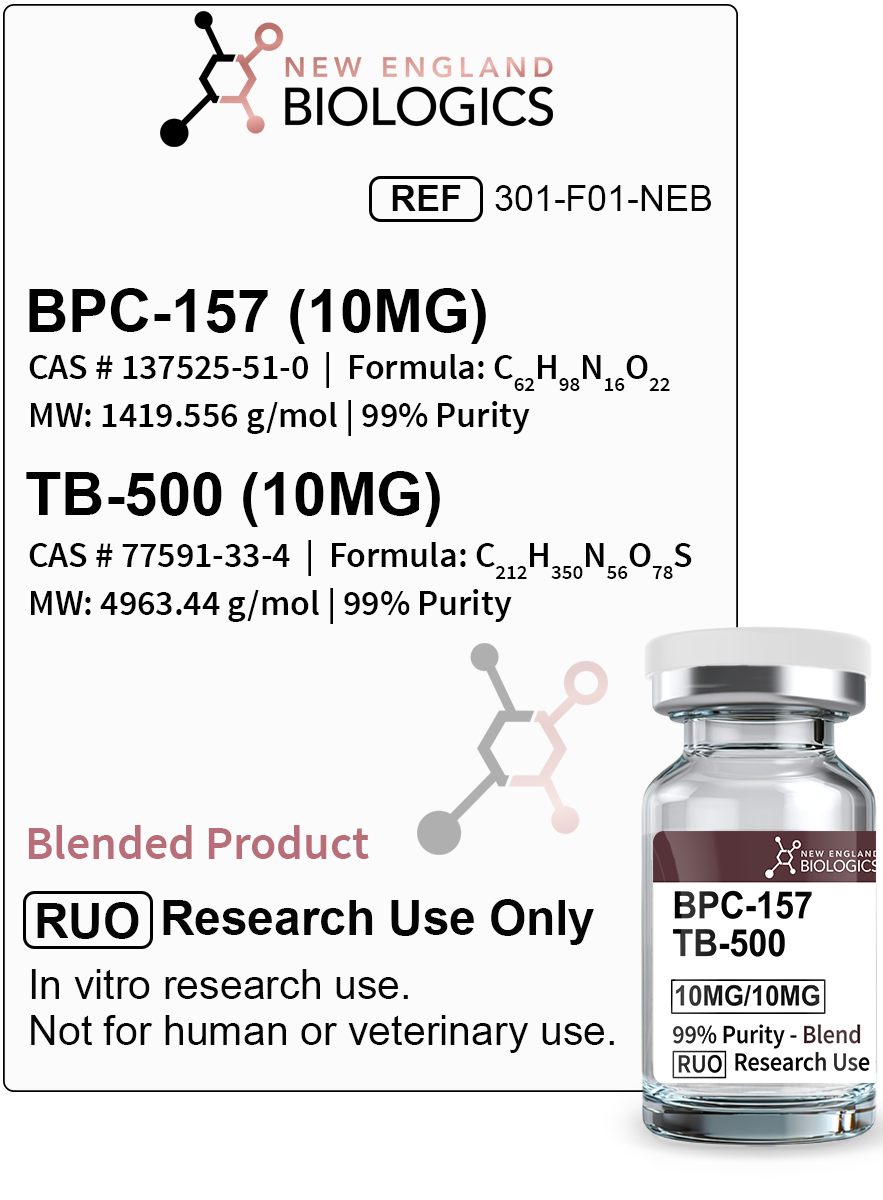
When combined, BPC-157 and TB-500 show synergistic effects in tendon rupture models. Studies comparing combination treatment to single-peptide or control groups demonstrate faster return of tensile strength and superior histological organization. These improvements result from synergistic upregulation of cellular content and enhanced extracellular matrix quality. Similar results appear in ligament healing studies, where combined protocols produce increased mechanical property recovery compared to individual peptide administration.
Sources:
Muscle Regeneration and Recovery
Both peptides demonstrate significant effects on muscle tissue repair and regeneration following injury. BPC-157 research shows the peptide accelerates healing of crushed and injured muscle tissue by enhancing granulation tissue formation, promoting angiogenesis, and increasing collagen production. The combined effect of these processes—improved blood flow, structural protein synthesis, and organized tissue remodeling—creates optimal conditions for muscle regeneration.
Studies examining BPC-157's effects on muscle healing reveal the peptide upgrades the combined triad of collagen formation, inflammatory cell activity, and angiogenesis, with these effects appearing at earlier intervals and progressing more rapidly compared to controls. This accelerated healing timeline translates to reduced recovery periods and faster return to functional capacity. The peptide's cytoprotective properties also help preserve existing muscle tissue during injury, minimizing the extent of damage requiring repair.
TB-500's contribution to muscle healing centers on its ability to promote cellular migration and reduce inflammation. The peptide enhances movement of satellite cells (muscle stem cells) and fibroblasts to injury sites, facilitating tissue regeneration. Research demonstrates TB-500 reduces inflammatory markers including IL-6 and TNF-alpha while releasing the anti-inflammatory fragment acetyl-SDKP, creating conditions that favor repair over chronic inflammation.
The combination addresses multiple aspects of muscle healing simultaneously. BPC-157 stimulates local growth factor production and vascular network development at the injury site, ensuring adequate nutrient and oxygen delivery. Simultaneously, TB-500 mobilizes repair cells to these areas and modulates the inflammatory environment. This coordinated action results in faster healing, reduced scar tissue formation, and improved functional recovery compared to single-peptide approaches.
Studies comparing combination therapy to individual peptides in muscle injury models show enhanced recovery outcomes including faster restoration of contractile function, reduced fibrosis, and improved tissue architecture. The synergistic effects prove particularly valuable in severe muscle injuries where extensive tissue damage requires comprehensive healing support.
Sources:
- Sikiric P, et al. "Stable Gastric Pentadecapeptide BPC 157 and Wound Healing." Frontiers in Pharmacology. 2021. https://pmc.ncbi.nlm.nih.gov/articles/PMC8275860/
- Tkalcevic VI, et al. "BPC 157's effect on healing." Journal of Physiology-Paris. 1997;91(3-5):173-178. https://pubmed.ncbi.nlm.nih.gov/9403790/
- Sosne G, et al. "Thymosin beta 4 promotes angiogenesis, wound healing, and hair follicle development." Mechanisms of Ageing and Development. 2004;125(2):113-115.
Wound Healing and Scar Reduction
BPC-157 and TB-500 demonstrate remarkable efficacy in accelerating wound healing across various tissue types while minimizing scar formation. BPC-157's effects on wound repair involve simultaneous enhancement of multiple healing processes including granulation tissue formation, collagen deposition, and angiogenesis. Research shows BPC-157 treatment promotes wound healing by improving the combined mechanisms of collagen synthesis, inflammatory cell recruitment, and blood vessel formation, with these processes appearing at earlier time points and progressing more rapidly than in untreated wounds.
Studies examining full-thickness wounds in animal models demonstrate BPC-157 significantly accelerates closure rates and improves healing quality. The peptide enhances reepithelialization, the process by which epithelial cells migrate across wound surfaces to restore tissue continuity. Additionally, BPC-157 promotes proper wound contraction, reducing final wound size while maintaining tissue integrity. Histological analysis reveals treated wounds exhibit better organized collagen architecture with reduced excessive scarring.
TB-500's contribution to wound healing stems from its effects on cellular migration and tissue remodeling. Research demonstrates topical or systemic thymosin beta-4 administration increases reepithelialization by 42-61% compared to controls at various time points post-wounding. Treated wounds also show increased collagen deposition and enhanced angiogenesis, with new blood vessel formation supporting healing tissue with improved nutrient delivery.
The peptide's ability to stimulate keratinocyte migration proves particularly important for wound closure. Studies show TB-500 stimulates cell migration 2-3-fold over baseline in migration assays, with effects observed at concentrations as low as 10 picograms. This remarkable potency enables effective wound healing support even with minimal peptide administration.
When combined, BPC-157 and TB-500 create synergistic effects that address all phases of wound healing. Early inflammatory phase benefits from both peptides' immunomodulatory effects, preventing excessive inflammation that can impair healing. Proliferative phase sees enhanced cellular migration (TB-500) coupled with increased growth factor expression and vascular development (BPC-157). Remodeling phase exhibits improved collagen organization and reduced fibrosis, resulting in stronger, more functional repaired tissue with minimal scarring.
Sources:
- Seiwerth S, et al. "BPC 157 and standard angiogenic growth factors: Gastrointestinal tract healing, lessons learned from tendon, ligament, muscle and bone healing." Current Pharmaceutical Design. 2018;24(18):1972-1989.
- Philp D, et al. "Thymosin beta 4 promotes dermal wound repair." Journal of Investigative Dermatology. 2003;121(5):1097-1105.
- Malinda KM, et al. "Thymosin beta4 accelerates wound healing." Journal of Investigative Dermatology. 1999;113(3):364-368. https://pubmed.ncbi.nlm.nih.gov/10469335/
Anti-Inflammatory and Cytoprotective Effects
Both BPC-157 and TB-500 demonstrate significant anti-inflammatory and cytoprotective properties that enhance tissue healing while preventing secondary damage. BPC-157 exerts anti-inflammatory effects through multiple mechanisms including modulation of nitric oxide signaling, reduction of pro-inflammatory cytokines, and stabilization of cellular integrity during metabolic stress. Research shows the peptide upregulates cytoprotective factors such as heme oxygenase-1 and heat shock proteins, preserving mitochondrial function and reducing oxidative damage.
Studies demonstrate BPC-157 significantly reduces inflammatory markers in injured tissues while promoting resolution of inflammation rather than mere suppression. This distinction proves important as appropriate inflammatory response is necessary for healing, but excessive or prolonged inflammation impairs recovery. BPC-157 modulates this balance, allowing beneficial inflammatory processes while preventing chronic inflammation that leads to tissue damage and impaired healing.
The peptide also demonstrates remarkable cytoprotective effects across multiple tissue types. Research shows BPC-157 protects cells from various forms of stress including ischemic injury, oxidative damage, and toxic insults. This protection extends to endothelial cells, where BPC-157 maintains vascular integrity during injury and supports endothelial function essential for tissue repair. The peptide's effects on the gastrointestinal system prove particularly notable, with studies demonstrating powerful protective effects on gastric mucosa and intestinal tissue.
TB-500 contributes significant anti-inflammatory activity through release of the acetyl-SDKP fragment and direct modulation of inflammatory pathways. Research demonstrates thymosin beta-4 suppresses activation of NF-κB, a key inflammatory transcription factor, in macrophages and other immune cells. This suppression reduces production of pro-inflammatory cytokines including TNF-alpha, IL-6, and IL-1β, creating an environment more conducive to tissue repair.
Studies show TB-500 also promotes resolution of inflammation by facilitating clearance of inflammatory mediators and supporting transition from inflammatory to reparative phases of healing. The peptide's effects on cellular migration enable proper trafficking of anti-inflammatory immune cells to injury sites, promoting balanced immune responses. Additionally, TB-500 reduces formation of fibrotic scar tissue, a common consequence of excessive inflammation, resulting in more functional repaired tissue.
The combination of BPC-157 and TB-500 provides comprehensive anti-inflammatory and cytoprotective support throughout the healing process. BPC-157's direct cellular protection coupled with TB-500's inflammatory modulation creates optimal conditions for tissue regeneration. Studies comparing combination therapy to individual peptides show enhanced reduction of inflammatory markers and improved preservation of tissue function, particularly in chronic inflammatory conditions where both protection and repair are needed simultaneously.
Sources:
- Cesarec V, et al. "Regeneration or Risk? A Narrative Review of BPC-157 for Musculoskeletal Healing." Sports Medicine and Health Science. 2024. https://pmc.ncbi.nlm.nih.gov/articles/PMC12446177/
- Goldstein AL, et al. "Thymosin β4: a multi-functional regenerative peptide. Basic properties and clinical applications." Expert Opinion on Biological Therapy. 2012;12(1):37-51.
- Sosne G, Kleinman HK. "Primary Mechanisms of Thymosin β4 Repair Activity in Dry Eye Disorders and Other Tissue Injuries." Investigative Ophthalmology & Visual Science. 2015;56(9):5110-5117.
Vascular Regeneration and Angiogenesis
Enhanced angiogenesis—the formation of new blood vessels—represents a critical mechanism through which BPC-157 and TB-500 accelerate tissue healing. Adequate vascular supply is essential for delivering oxygen, nutrients, and immune cells to healing tissues while removing metabolic waste products. Both peptides promote angiogenesis through complementary mechanisms, creating robust vascular networks that support comprehensive tissue regeneration.
BPC-157 significantly promotes angiogenesis by enhancing vascular endothelial growth factor receptor-2 (VEGFR2) activity and nitric oxide signaling through activation of the Akt-endothelial nitric oxide synthase (eNOS) pathway. This mechanism increases nitric oxide production, which is essential for endothelial cell proliferation, vessel dilation, and new capillary formation. Research demonstrates these effects prove particularly beneficial in ischemic or hypovascular tissues such as tendons and ligaments where limited blood supply typically impedes healing.
Studies show BPC-157 stabilizes existing vascular structures and modulates vascular tone via nitric oxide-mediated vasodilation, safeguarding tissues against ischemic damage during repair processes. The peptide also activates alternative angiogenic pathways including VEGF-independent routes via Src-caveolin-1-eNOS signaling, providing redundant mechanisms for vascular regeneration. In endothelial cells, BPC-157 activates ERK1/2 signaling, enhancing proliferation, migration, and vascular tube formation through transcription factors including c-Fos, c-Jun, and Egr-1.
TB-500 complements these effects through its promotion of endothelial cell migration and organization. Research demonstrates thymosin beta-4 was identified as a gene upregulated 4-6-fold during early blood vessel formation and promotes growth of new blood cells from existing vessels. The peptide facilitates endothelial cell movement to areas requiring vascularization, enabling rapid development of capillary networks in healing tissue.
Studies examining angiogenesis following TB-500 treatment reveal increased collagen deposition and enhanced blood vessel formation in treated wounds. Research using synthetic sponge implantation models—a standard method for assessing angiogenesis—shows TB-500 significantly increases vessel density and organization compared to controls. This enhanced vascularization translates to improved tissue oxygenation and accelerated healing across multiple tissue types.
When combined, BPC-157 and TB-500 create synergistic angiogenic effects exceeding individual peptide benefits. Studies comparing combination treatment to single-peptide approaches demonstrate larger and better-organized vascular networks in healing tissue. This enhanced microcirculation results in increased nutrient delivery to injury sites and more efficient waste removal, accelerating overall healing timelines. Research in various injury models consistently shows combination therapy produces superior vascular regeneration compared to either peptide alone.
Sources:
- Cesarec V, et al. "Regeneration or Risk? A Narrative Review of BPC-157 for Musculoskeletal Healing." Sports Medicine and Health Science. 2024. https://pmc.ncbi.nlm.nih.gov/articles/PMC12446177/
- Tkalcevic VI, et al. "BPC 157's effect on healing." Journal of Physiology-Paris. 1997;91(3-5):173-178. https://pubmed.ncbi.nlm.nih.gov/9403790/
- Bock-Marquette I, et al. "Thymosin beta-4 activates integrin-linked kinase and promotes cardiac cell migration, survival, and cardiac repair." Nature. 2004;432(7016):466-472.
Post-Surgical Recovery and Rehabilitation
BPC-157 and TB-500 demonstrate significant utility in accelerating post-surgical recovery and supporting rehabilitation processes. Surgical procedures create controlled tissue injury requiring comprehensive healing involving multiple tissue types—skin, fascia, muscle, and potentially bone, tendon, or ligament depending on the procedure. The combination of BPC-157 and TB-500 addresses all phases of surgical wound healing through their complementary mechanisms.
Research on surgical wound healing demonstrates BPC-157 significantly improves outcomes in various surgical models including anastomoses (surgical connections between tissues). Studies examining colon-colon anastomoses show BPC-157 treatment results in significantly better healing as assessed by histological examination of collagen and reticulin formation, blood vessel development, and overall tissue organization. The peptide promotes proper wound closure while minimizing complications such as adhesion formation and dehiscence (wound separation).
BPC-157's effects on preventing adhesion and fibrous band formation prove particularly valuable in post-surgical recovery. Excessive scar tissue and adhesions represent common complications following surgery, potentially causing pain, restricted movement, and impaired function. Research shows BPC-157 modulates the healing process to minimize excessive fibrosis while maintaining adequate tissue strength, resulting in more functional repair with fewer complications.
TB-500 contributes to post-surgical recovery through multiple mechanisms including enhanced cellular migration to surgical sites, reduced inflammation, and improved tissue flexibility. Studies demonstrate thymosin beta-4 accelerates healing of various surgical wounds by promoting cell movement and organizing tissue remodeling. The peptide's anti-inflammatory properties prove particularly beneficial in the post-surgical period when excessive inflammation can impair healing and increase complication risk.
Research shows TB-500 improves tissue elasticity and reduces stiffness in healing tissues, facilitating earlier mobilization and rehabilitation. This enhanced flexibility allows patients to begin physical therapy sooner while reducing risk of restricted range of motion—a common complication following musculoskeletal surgery. The peptide also promotes proper collagen organization during healing, resulting in stronger, more resilient repaired tissue.
When combined in post-surgical protocols, BPC-157 and TB-500 create comprehensive healing support addressing all aspects of surgical recovery. The combination accelerates wound closure, reduces inflammation, minimizes scar formation, and promotes proper tissue organization. Studies comparing combination therapy to standard post-surgical care show reduced recovery times, fewer complications, and improved functional outcomes. These benefits translate to earlier return to normal activities, reduced rehabilitation duration, and better long-term surgical results.
Sources:
Disclaimer: The research articles listed above are for informational purposes only.
This product is intended for research use only and not for human or veterinary use.