Molecular Mechanisms and Protease Inhibition
The most substantive peer-reviewed research on the Glu-Asp-Leu tripeptide comes from biochemical studies examining HIV-1 protease inhibition. Research published in Biochemistry demonstrates that the transframe octapeptide Phe-Leu-Arg-Glu-Asp-Leu-Ala-Phe, found at the N-terminus of the HIV-1 transframe region, and its analogues function as competitive inhibitors of mature HIV-1 protease. The smallest and most potent analogues identified were tripeptides, with Glu-Asp-Leu showing a Ki value of approximately 50 μM and the related Glu-Asp-Phe demonstrating Ki approximately 20 μM.
X-ray crystallographic studies reveal that interactions of glutamic acid at the P2 position and leucine at the P1 position of Glu-Asp-Leu with residues of the HIV-1 protease active site are similar to those observed in other product-enzyme complexes. Notably, protease inhibition by Glu-Asp-Leu depends on a protonated form of a group with a pKa of 3.8. Unlike typical HIV-1 protease inhibitors which are highly hydrophobic, Glu-Asp-Leu exhibits extreme water solubility, with binding affinity decreasing as NaCl concentration increases.
Significantly, Glu-Asp-Leu functions as a poor inhibitor of the mammalian aspartic acid protease pepsin (Ki approximately 7.5 mM), demonstrating selectivity between viral and mammalian proteases. This selective inhibition profile indicates that the tripeptide can distinguish between structurally related enzyme targets, suggesting potential for specific biological effects.
Sources:
Peptide Regulation of Gene Expression
Research on ultrashort peptides in the Khavinson bioregulator family demonstrates that peptides consisting of 2-7 amino acid residues can regulate gene expression through direct nuclear interaction. Studies published in Molecules detail systematic evidence that short peptides penetrate cellular and nuclear membranes to interact with nucleosomes, histone proteins, and DNA, influencing transcription patterns.
These peptide-DNA interactions involve sequence recognition in gene promoters, which are critical for template-directed synthetic reactions, replication, transcription, and DNA repair. The mechanism includes modulation of DNA methylation status—an epigenetic mechanism for gene activation or repression. Short peptides can recognize methylation status and interact directly with DNA, potentially blocking DNA methyltransferase action to influence transcription regulation.
Research demonstrates that peptides can affect chromatin structure accessibility, with some peptides showing ability to decondense heterochromatin (tightly packed, transcriptionally inactive DNA) to make genetic material more accessible for transcription. This chromatin remodeling capacity allows peptides to restore gene expression patterns that may become suppressed during aging or metabolic stress.
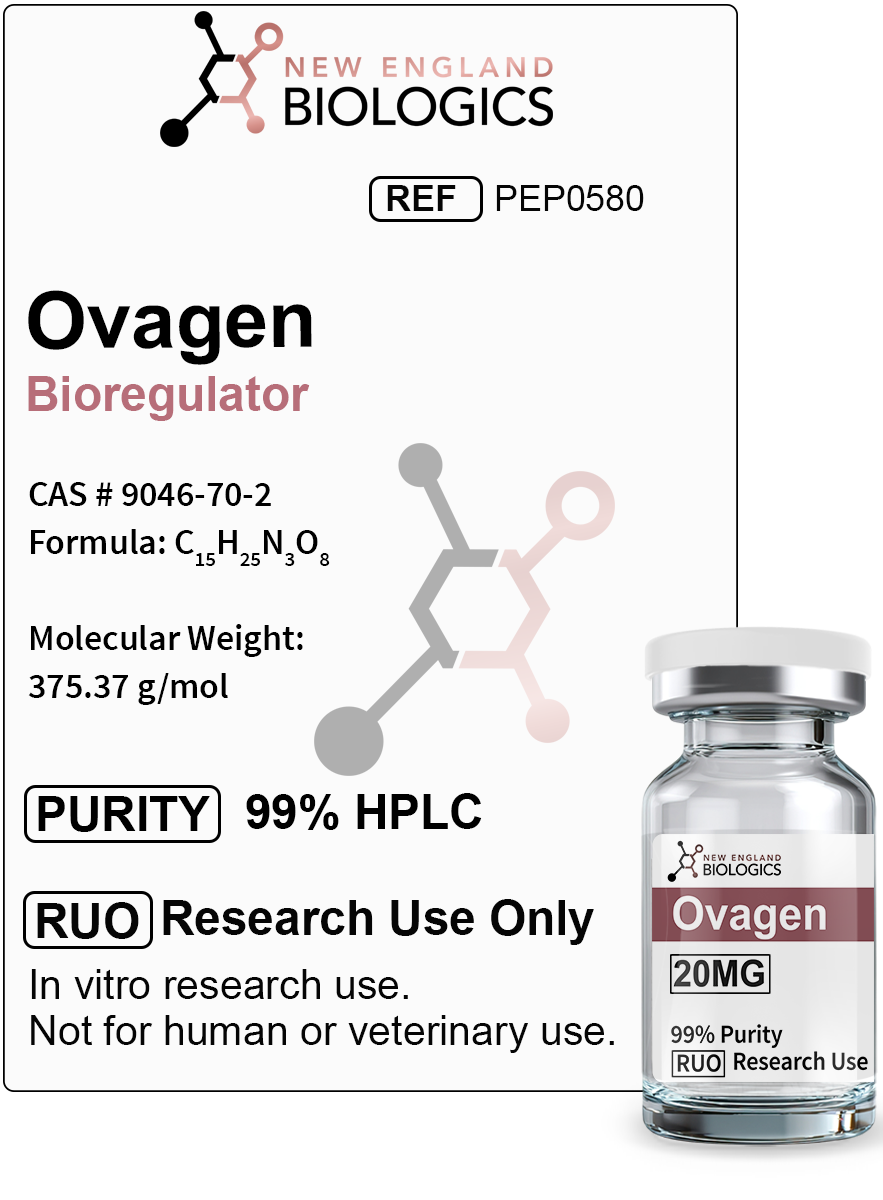
The tissue-specific effects of different peptide sequences appear related to their amino acid composition and charge profiles. The acidic residues in Ovagen (two glutamic/aspartic acid residues) create interaction patterns distinct from peptides containing basic residues like lysine or arginine, potentially explaining selective effects on particular cell types or organs.
Sources:
Cellular Transport and Bioavailability
Ultrashort peptides like Ovagen utilize specialized transport mechanisms for cellular entry. Research published in the International Journal of Molecular Sciences examines transport of biologically active ultrashort peptides using POT (peptide transporter) and LAT (L-amino acid transporter) carriers. These transporters, particularly PepT1 and PepT2, facilitate absorption of di- and tripeptides across intestinal epithelium and renal tubules.
This transport mechanism provides several advantages: tripeptides can achieve cellular uptake more efficiently than larger peptides requiring endocytosis or receptor-mediated transport; the small molecular size allows passage across biological membranes; and peptide transporters are widely distributed in tissues including intestinal epithelium, kidney, brain, and other organs.
The leucine component of Ovagen may contribute to transport efficiency, as branched-chain amino acids and their containing peptides show affinity for certain transporter systems. This efficient cellular delivery mechanism enables peptides to reach intracellular targets including the nucleus where gene regulatory effects occur.
Sources:
Anti-inflammatory and Immunomodulatory Effects
Research on Khavinson peptide bioregulators demonstrates anti-inflammatory and immunomodulatory properties across multiple peptide sequences. A study published in Molecules examining five different Khavinson peptides (including tripeptides) found that these peptides can modulate key proliferative patterns in immune cells, increasing tyrosine phosphorylation of mitogen-activated cytoplasmic kinases.
The research demonstrated that peptides inhibit expression of pro-inflammatory cytokines TNF-α and IL-6 when cells are stimulated by bacterial lipopolysaccharide. Additionally, peptides reduced cell adhesion to activated endothelial cells—a typical pro-inflammatory mechanism. The peptides appear to function as natural inducers of TNF tolerance in monocytes and act on macrophages as anti-inflammatory molecules during inflammatory activity.
These findings suggest that ultrashort peptides may influence inflammatory signaling pathways through modulation of gene expression and protein synthesis. The anti-inflammatory effects occur through mechanisms distinct from conventional anti-inflammatory drugs, operating at the transcriptional level rather than through direct enzyme inhibition or receptor antagonism.
While this research examined related Khavinson peptides rather than Ovagen specifically, the shared mechanisms of ultrashort peptide bioregulation suggest similar pathways may be relevant to Glu-Asp-Leu function in cellular systems.
Sources:
Aging and Cellular Protection
Research on peptide bioregulators published in Bulletin of Experimental Biology and Medicine summarizes decades of investigation into peptide effects on aging mechanisms. Studies demonstrate that short peptides can influence age-related changes in tissue function through regulation of gene expression and protein synthesis pathways.
The mechanism involves restoration of protein synthesis capacity in aging tissues where gene expression patterns become dysregulated. As organisms age, certain genes become hypermethylated (silenced) while others become hypomethylated, leading to altered protein production. Short peptides can modulate these methylation patterns to restore more youthful gene expression profiles.
Research indicates that peptide effects are more pronounced in older organisms compared to young ones, suggesting these molecules specifically address age-related dysregulation rather than simply enhancing normal function. This age-dependent response pattern supports the concept that bioregulatory peptides work by normalizing cellular function rather than forcing supraphysiological responses.
The tissue-specific nature of different peptide sequences allows targeted intervention in particular organs or systems showing age-related decline. This selectivity enables customized approaches to supporting different aspects of physiological function during aging.
Sources:
Disclaimer: The research articles listed above are for informational purposes only.
This product is intended for research use only and not for human or veterinary use.