Muscle Development and Protein Synthesis
The CJC-1295 and Ipamorelin combination promotes lean muscle development through multiple mechanisms mediated by growth hormone and IGF-1. Growth hormone directly and indirectly stimulates protein synthesis while reducing protein breakdown in skeletal muscle tissue. Research demonstrates that GH acts as a primary anabolic hormone during both fed and fasted states, with effects becoming more pronounced during metabolic stress when GH increases protein synthesis and decreases breakdown at the whole-body level.
Studies show that enhanced GH secretion increases non-oxidative disposal of amino acids, indicating greater incorporation into protein rather than oxidation for energy. GH-induced IGF-1 production further amplifies anabolic effects by activating satellite cells, enhancing muscle fiber regeneration, and promoting cellular pathways essential for muscle hypertrophy. The preservation of lean body mass is particularly evident during periods of caloric restriction or aging, where GH helps maintain muscle tissue while preferentially mobilizing fat stores for energy.
The synergistic effect of combining GHRH analogs with GHRPs creates more robust and sustained GH pulses, which research indicates produces superior outcomes for muscle development compared to single peptide administration. Clinical observations suggest that the combination promotes gradual, sustainable increases in lean muscle mass while supporting recovery from exercise-induced muscle damage. The preserved pulsatile GH pattern closely mimics natural physiological secretion, optimizing receptor sensitivity and maximizing anabolic responses in muscle tissue.
Sources:
- Teichman SL, et al. "Prolonged stimulation of growth hormone (GH) and insulin-like growth factor I secretion by CJC-1295, a long-acting analog of GH-releasing hormone, in healthy adults." Journal of Clinical Endocrinology & Metabolism. 2006;91(3):799-805. https://pubmed.ncbi.nlm.nih.gov/16352683/
- Raun K, et al. "Ipamorelin, the first selective growth hormone secretagogue." European Journal of Endocrinology. 1998;139(5):552-561. https://pubmed.ncbi.nlm.nih.gov/9849822/
- Jørgensen JOL, et al. "Effects of Growth Hormone on Glucose, Lipid, and Protein Metabolism in Human Subjects." Endocrine Reviews. 2009;30(2):152-177. https://pubmed.ncbi.nlm.nih.gov/19240267/
Fat Loss and Metabolic Enhancement
Growth hormone exerts profound effects on lipid metabolism, with fat mobilization and oxidation representing among its most prominent metabolic actions. Research demonstrates that GH stimulates lipolysis in both visceral and subcutaneous adipose tissue by increasing hormone-sensitive lipase activity, resulting in elevated plasma free fatty acid levels. Studies show that a 4-fold increase in plasma GH produces a shift in fuel selection, with 29% more fat oxidation and 69% less carbohydrate oxidation, indicating enhanced metabolic flexibility.
The mechanism involves GH directly binding to receptors on adipocytes, stimulating triglyceride breakdown while suppressing the tissue's ability to accumulate circulating lipids. This creates a net reduction in adipose tissue mass through both decreased lipid synthesis and increased mobilization for oxidation. Research confirms that GH enhances mitochondrial oxidative capacity in skeletal muscle, with 16-35% increases in ATP production rate and citrate synthase activity, directly supporting the tissue's ability to utilize mobilized fatty acids as fuel.
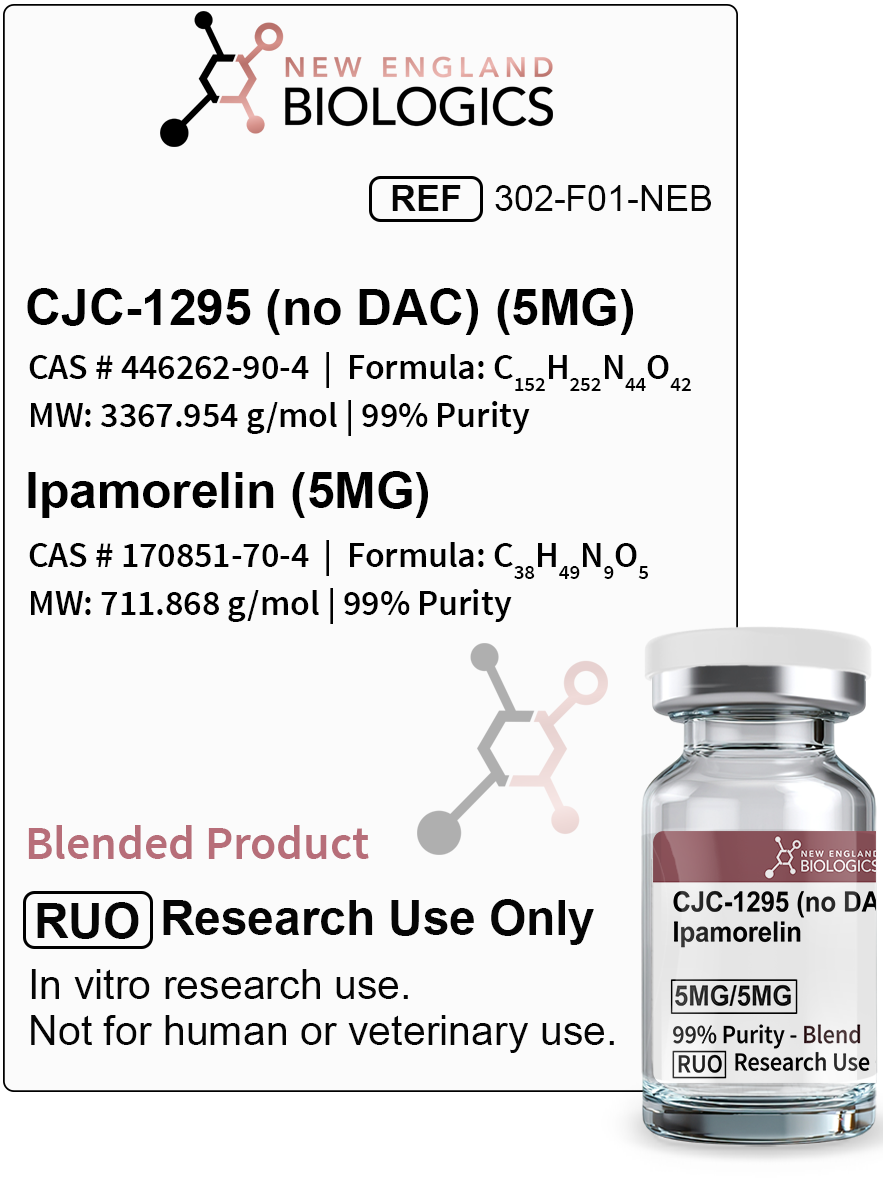
The combination of CJC-1295 and Ipamorelin provides sustained elevation of growth hormone and IGF-1 levels, creating an optimal metabolic environment for body recomposition. The synergistic GH stimulation promotes preferential fat loss while preserving or even enhancing lean muscle mass, a critical distinction from simple caloric restriction which typically results in loss of both fat and muscle tissue. Studies indicate that GH's effects on metabolism include enhanced insulin sensitivity in the context of increased lipolysis, creating favorable conditions for improved body composition.
Importantly, the selective nature of Ipamorelin ensures that cortisol levels remain unaffected, avoiding the counter-productive effects of elevated stress hormones on body composition. The physiological pulsatile GH pattern produced by this combination maintains receptor sensitivity and prevents the metabolic complications associated with continuous GH elevation.
Sources:
Tissue Repair and Recovery Enhancement
The elevated IGF-1 levels resulting from enhanced GH secretion play crucial roles in tissue repair and recovery processes. Insulin-like growth factor-1 demonstrates significant wound healing and tissue regeneration properties through multiple mechanisms. Research shows that IGF-1 promotes keratinocyte migration and proliferation, accelerates re-epithelialization, enhances collagen deposition, and stimulates angiogenesis in healing tissues.
Studies demonstrate that systemic IGF-1 administration results in approximately 60% increases in tissue strength during healing of collagenous extracellular matrices. The mechanisms involve IGF-1-mediated stimulation of cellular proliferation, enhanced protein synthesis, and activation of anti-inflammatory pathways. Research indicates that IGF-1 inhibits inflammation and accelerates angiogenesis through Ras/PI3K/IKK/NF-κB signaling pathways, creating an optimal environment for tissue repair.
In skeletal muscle, IGF-1 promotes repair through increased satellite cell activation and muscle fiber regeneration. The growth hormone and IGF-1 axis supports recovery from exercise-induced muscle damage by enhancing protein synthesis, reducing inflammation, and improving nutrient delivery through increased vascularization. Clinical observations suggest that the combination of growth hormone secretagogues accelerates recovery time between training sessions and reduces the duration of muscle soreness following intense physical activity.
The synergistic GH stimulation from CJC-1295 and Ipamorelin provides sustained elevation of both GH and IGF-1, creating consistent support for ongoing repair and recovery processes. Research demonstrates that systemic IGF-1 improves healing across various tissue types including skin, ligaments, tendons, and muscle tissue. The preserved pulsatile GH pattern maintains physiological signaling that optimizes tissue repair without the complications associated with continuous hormone elevation.
Sources:
Physical Performance and Exercise Capacity
The combination of enhanced growth hormone and IGF-1 levels supports improved exercise capacity and physical performance through multiple mechanisms. Research demonstrates that growth hormone increases mitochondrial oxidative capacity in skeletal muscle, with significant elevations in ATP production and citrate synthase activity. These changes in cellular energetics directly support enhanced physical performance by improving the muscle's ability to generate energy during exercise.
Studies show that GH administration promotes shifts in fuel utilization toward increased fat oxidation and decreased carbohydrate oxidation, which can enhance endurance performance by preserving glycogen stores for high-intensity efforts. The enhanced lipolysis and free fatty acid availability provide alternative fuel sources that support prolonged physical activity. Research indicates that GH also increases abundance of muscle mRNAs encoding mitochondrial proteins from both nuclear and mitochondrial genomes, suggesting comprehensive improvements in oxidative metabolism.
The synergistic effect of combining GHRH and GHRP analogs creates more robust GH pulses that closely mimic natural physiological patterns. Research demonstrates that co-administration of these peptide classes yields synergistic increases in GH secretion and enhanced IGF-1 production, potentially providing superior support for training adaptations compared to either compound alone. The preserved pulsatile pattern is critical as it maintains normal receptor function and cellular responsiveness to GH signaling.
Recovery between training sessions represents another key benefit, with enhanced GH and IGF-1 levels supporting faster repair of exercise-induced muscle damage, reduced inflammation, and improved adaptation to training stress. The combination's effects on sleep quality through GH's natural circadian rhythm enhancement may further support recovery and performance gains.
Sources:
Sleep Quality and Circadian Rhythm Support
Growth hormone secretion exhibits strong circadian patterns, with the most intense period of release occurring shortly after the onset of deep sleep. The CJC-1295 and Ipamorelin combination supports optimization of these natural rhythms when administered strategically. Research indicates that GHRH demonstrates hypnotic properties, increasing both the duration and intensity of slow-wave (deep) sleep, which represents the most restorative sleep phase.
Enhanced GH secretion during sleep supports multiple recovery processes including tissue repair, immune function optimization, and metabolic regulation. Studies show that adequate growth hormone levels are essential for normal sleep architecture, with GH deficiency associated with sleep disturbances and reduced slow-wave sleep duration. Conversely, optimization of GH secretion through peptide administration often results in subjective improvements in sleep quality and morning restoration.
The preserved pulsatile nature of GH release with this peptide combination is particularly important for maintaining normal sleep patterns. Continuous GH elevation can disrupt natural rhythms, while pulsatile secretion that aligns with circadian patterns supports rather than interferes with sleep architecture. Many users report enhanced sleep depth, reduced nighttime awakenings, and improved morning energy levels when using this combination, suggesting beneficial effects on sleep-related recovery processes.
The relationship between sleep quality and daytime physical and cognitive performance creates a positive feedback loop: better sleep supports improved training capacity and recovery, while appropriate training and hormone optimization enhance sleep quality, collectively contributing to overall health and performance optimization.
Sources:
- Ionescu M, et al. "Pulsatile secretion of growth hormone (GH) persists during continuous stimulation by CJC-1295, a long-acting GH-releasing hormone analog." Journal of Clinical Endocrinology & Metabolism. 2006;91(12):4792-4797. https://pubmed.ncbi.nlm.nih.gov/17018654/
- Alba M, et al. "Once-daily administration of CJC-1295, a long-acting growth hormone-releasing hormone (GHRH) analog, normalizes growth in the GHRH knockout mouse." American Journal of Physiology-Endocrinology and Metabolism. 2006;291(6):E1290-E1294. https://pubmed.ncbi.nlm.nih.gov/16825605/
Disclaimer: The research articles listed above are for informational purposes only.
This product is intended for research use only and not for human or veterinary use.