Research Applications
Telomere Length Extension and Cellular Lifespan
Epithalon demonstrates potent telomerase-activating properties that directly impact cellular aging processes. Research published in Biogerontology confirmed that Epithalon treatment of human somatic cells induces expression of the telomerase catalytic subunit (hTERT), enzymatic activity of telomerase, and significant telomere elongation. In studies using human fetal fibroblast cultures, Epithalon treatment extended cellular proliferative potential from termination at the 34th passage in control populations to beyond the 44th passage in treated cells, effectively surpassing the Hayflick limit—the maximum number of divisions normal cells can undergo before senescence.
Quantitative analysis revealed dose-dependent telomere length increases in both normal and cancer cell lines. Normal epithelial and fibroblast cells treated with Epithalon concentrations ranging from 0.1 to 1 μg/ml demonstrated significant telomere elongation through hTERT mRNA upregulation and telomerase enzyme activation. Three-week treatment protocols with 1 μg/ml Epithalon produced measurable increases in telomere length while maintaining normal cellular function and avoiding abnormal proliferation patterns.
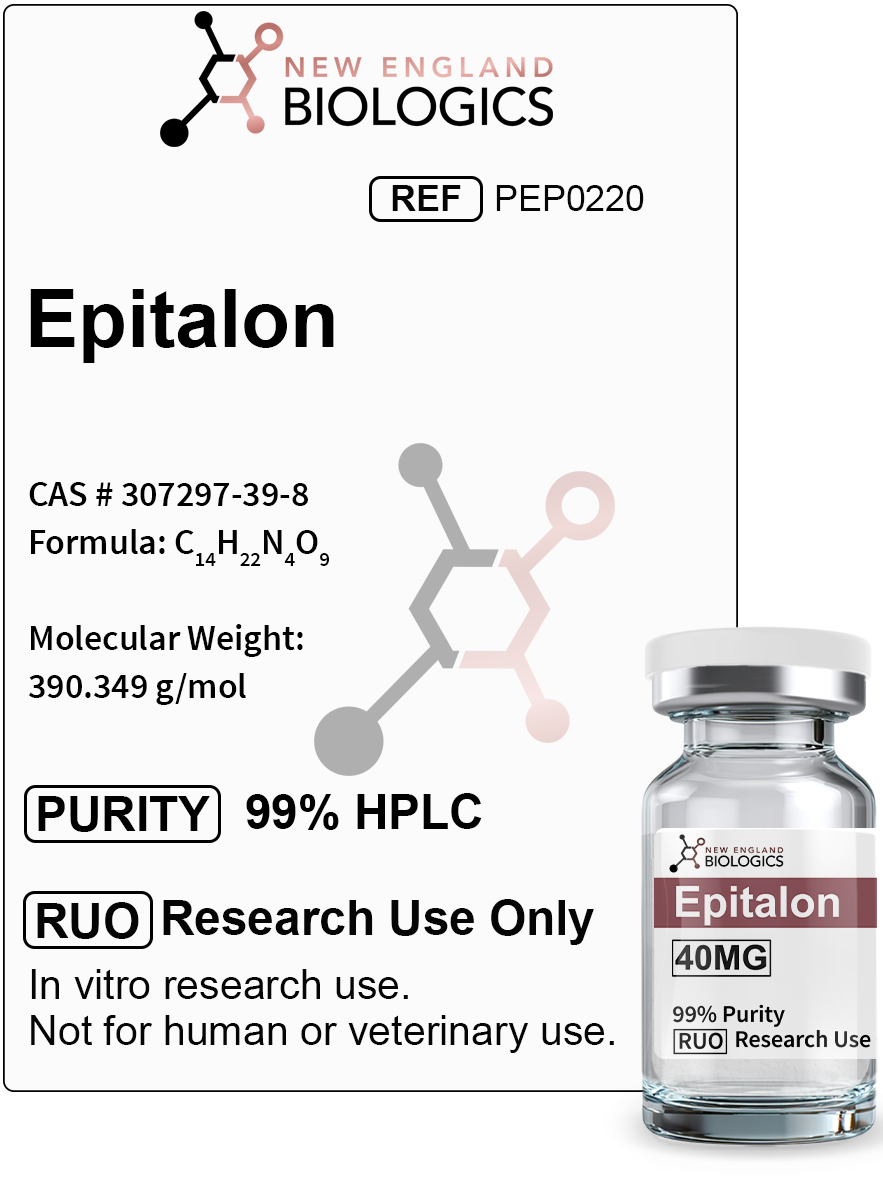
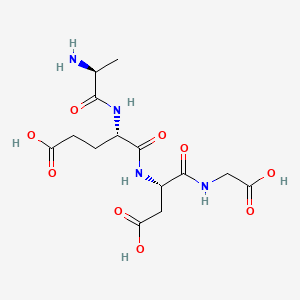
The mechanism involves Epithalon's interaction with nuclear DNA and transcriptional machinery. Studies indicate the peptide's small molecular weight (molecular formula C14H22N4O9) allows it to penetrate cell membranes and access nuclear compartments where it influences gene expression. Epithalon induces decondensation of heterochromatin, particularly pericentromeric structural heterochromatin, releasing genes that become repressed due to age-related chromatin condensation. This chromatin remodeling restores access to previously silenced genetic regions, including telomerase genes.
Research using embryonic development models demonstrates Epithalon's ability to preserve telomere integrity across generations. Studies on bovine oocyte maturation and embryo development found that telomerase activation via Epithalon significantly improved oocyte maturation rates and enhanced post-thawed embryo quality, with increased blastocyst hatching rates and improved implantation potential. The peptide maintained telomerase protein localization in nuclear compartments and prevented the cytoplasmic mislocalization associated with cellular degradation.
Sources:
Aging, Longevity and Mortality Reduction
Clinical and animal research demonstrates Epithalon's profound effects on lifespan extension and age-related mortality reduction. Long-term studies in mice show that Epithalon administration significantly extended maximum lifespan by 12.3% and increased the lifespan of the last 10% of survivors by 13.3% compared to control groups, while showing no adverse effects on body weight or food consumption. The peptide slowed age-related cessation of estrous function and decreased chromosomal aberration frequency in bone marrow cells by 17.1%.
Human clinical trials conducted over extended observation periods reveal remarkable mortality benefits. A prospective cohort study involving 266 elderly adults treated with epithalamin (the parent compound from which Epithalon was derived) over 2-3 years with subsequent 4-5 year follow-up demonstrated mortality reduction of 28% overall, with a 2-fold decrease in cardiovascular disease-specific mortality. Extended 15-year follow-up studies showed that treatment prevented age-related impairment of physical endurance, normalized circadian rhythm of melatonin production, and improved carbohydrate and lipid metabolism markers.
Studies in aged non-human primates provide crucial translational evidence. Research with senescent rhesus monkeys (aged 20-27 years) showed that Epithalon administration decreased basal plasma levels of glucose and insulin while increasing basal nighttime melatonin levels—reversing age-associated endocrine dysfunction patterns. The peptide restored glucose metabolism markers including improved glucose disappearance rates and normalized insulin response peaks, suggesting restoration of pancreatic and metabolic function to more youthful states.
The peptide demonstrates geroprotective activity across multiple species. Studies in Drosophila melanogaster showed Epithalon increased lifespan by 11-16% when applied at extraordinarily low concentrations (0.001×10⁻⁶ to 5×10⁻⁶ wt.% of culture medium). Notably, these effective concentrations were 16,000-80,000,000 times lower than concentrations of melatonin required for comparable effects, suggesting highly potent regulatory mechanisms rather than simple antioxidant activity.
Epithalon treatment significantly influences age-related disease incidence. Long-term administration in mice inhibited development of leukemia by 6-fold and reduced total spontaneous tumor incidence, with no increase in cancer risk despite telomerase activation—addressing theoretical concerns about uncontrolled proliferation. The peptide maintained protective effects throughout natural lifespan without evidence of tolerance or diminishing efficacy.
Sources:
Circadian Rhythm Regulation and Melatonin Production
Epithalon exerts significant regulatory effects on pineal gland function and circadian rhythm homeostasis, particularly in restoring age-related declines in melatonin synthesis. Research in aged primates demonstrates that Epithalon administration significantly increases nighttime melatonin levels in senescent monkeys while showing minimal effects in young animals, indicating specific targeting of age-related dysfunction. Studies revealed that in aged rhesus monkeys (20-26 years), Epithalon increased melatonin levels more than 3-fold compared to baseline, restoring circadian patterns characteristic of younger animals.
Clinical studies in elderly humans confirm these findings. Research involving 75 women showed that sublingual Epithalon administration (0.5 mg/day for 20 days) significantly modulated expression of key circadian rhythm genes. Gene expression analysis revealed Clock expression in leukocytes decreased 1.8-fold, Cry2 expression doubled, and Csnk1e expression in lymphocytes decreased 2.1-fold—all statistically significant changes indicating re-entrainment of disrupted circadian oscillations. These molecular changes correlated with improved sleep quality and normalized cortisol secretion patterns.
The mechanism involves direct stimulation of melatonin biosynthetic enzymes in pineal tissue. Studies using rat pinealocytes demonstrated that Epithalon upregulates both arylalkylamine N-acetyltransferase (AANAT) and phosphorylated CREB (pCREB), the rate-limiting enzymes in melatonin synthesis. This enzymatic stimulation appears tissue-specific, as Epithalon selectively protected aged human pinealocytes from degenerative changes while promoting functional restoration of the gland's secretory capacity.
Research indicates Epithalon's chronobiotic activity extends beyond simple hormone stimulation to include structural preservation of pineal tissue. Studies show the peptide protects pineal gland architecture from age-related involution, maintaining cellular integrity of pineal parenchyma. This preservation effect contributes to sustained melatonin production capacity rather than temporary hormonal fluctuation.
The peptide normalizes disrupted neurotransmitter rhythms involved in circadian regulation. Studies in rats exposed to circadian-disrupting xenobiotics showed Epithalon prevented disturbances in diurnal dopamine rhythms in the median eminence and normalized norepinephrine dynamics in the medial preoptic area. These effects on hypothalamic catecholamine regulation contribute to restoration of proper circadian signaling needed for reproductive hormone surges and metabolic timing.
Sources:
Immune System Enhancement and Immunosenescence
Epithalon demonstrates significant immunomodulatory effects, particularly in reversing age-related immune dysfunction and enhancing thymic function. Research shows the peptide increases proliferation of T-lymphocytes in the thymus, with studies indicating enhanced production of interferon gamma by T-cells. This immune activation occurs through multiple pathways including modulation of interleukin signaling and regulation of immune cell differentiation.
Studies on thymocyte function reveal Epithalon's effects on immune cell stress responses and proliferation capacity. Research investigating the peptide's influence on interleukin-1β signal transduction demonstrated that Epithalon modulates ceramide-mediated signaling pathways involved in immune cell activation. The peptide affects sphingomyelin pathway transmission of cytokine signals, influencing both stress response mechanisms and immune-competent cell function during metabolic challenges.
Clinical observations in elderly populations show Epithalon treatment improves overall immune system parameters. Long-term studies involving elderly subjects demonstrated improvements in immune system indices alongside cardiovascular, endocrine, and nervous system function. These systemic improvements correlate with reduced infection susceptibility and enhanced immune surveillance capacity in aged individuals.
Research indicates Epithalon's immunological effects extend to regulation of T-cell subpopulations and cytokine balance. The peptide influences the ratio of T-helper cells to suppressor cells, promoting more youthful immune profiles. Studies suggest this rebalancing occurs through effects on thymic peptide signaling and restoration of neuroendocrine-immune system communication that deteriorates with aging.
The peptide protects immune cells from radiation-induced and oxidative damage. Research on irradiation-exposed animals showed Epithalon inhibits apoptotic death of spleen lymphocytes, suggesting protective effects on immune cell populations during stress conditions. This anti-apoptotic activity in lymphoid tissue contributes to preservation of immune system capacity during aging and environmental challenges.
Sources:
Antioxidant Protection and Oxidative Stress Reduction
Epithalon exhibits potent antioxidant activity through upregulation of endogenous antioxidant defense systems. Research in aging rats demonstrated that Epithalon treatment significantly increased activities of key antioxidant enzymes including superoxide dismutase (SOD), glutathione peroxidase (GPX), and glutathione-S-transferase. These enzymes constitute the first line of cellular defense against reactive oxygen species (ROS) and oxidative damage to cellular macromolecules.
The peptide's antioxidant mechanism operates through activation of the nuclear factor erythroid 2-related factor 2 (Nrf2) pathway, a master regulator of cellular antioxidant responses. Studies show Epithalon enhances expression of antioxidant response element (ARE)-regulated genes, leading to increased synthesis of protective proteins and enzymes. This endogenous activation provides sustained cellular protection compared to direct free radical scavenging by exogenous antioxidants.
Research demonstrates Epithalon reduces oxidative damage markers in multiple tissue types. Studies show decreased levels of malondialdehyde (MDA) and lipid peroxidation products in treated animals, indicating reduced oxidative injury to cellular membranes. The peptide preserves mitochondrial integrity by protecting against superoxide radical accumulation in mitochondrial compartments, maintaining efficient energy production and preventing mitochondrial-derived oxidative stress.
Epithalon's antioxidant effects contribute to preservation of tissue function during aging and metabolic stress. Research in retinal pigment epithelial cells exposed to high glucose conditions—modeling diabetic retinopathy—showed Epithalon restored impaired antioxidant gene expression and reduced intracellular ROS levels. The peptide prevented hyperglycemia-induced cellular dysfunction by maintaining redox balance and protecting against oxidative damage to DNA, proteins, and lipid structures.
Studies indicate the peptide's antioxidant activity occurs at remarkably low concentrations. Research in Drosophila melanogaster demonstrated geroprotective effects at concentrations 16,000-80,000,000 times lower than those required for melatonin, suggesting Epithalon functions through highly efficient regulatory mechanisms rather than stoichiometric antioxidant consumption. This regulatory activity involves modulation of oxidative stress response pathways at the transcriptional level.
The peptide demonstrates protective effects against radiation-induced oxidative damage. Studies show Epithalon reduces formation of chromosomal aberrations caused by oxidative stress in bone marrow cells, suggesting DNA-protective antioxidant effects. This chromosomal protection occurs both in normal aging and in conditions of accelerated oxidative stress, indicating broad-spectrum antioxidant defense enhancement.
Sources:
Retinal Health and Vision Preservation
Epithalon demonstrates remarkable therapeutic efficacy in treating retinal degenerative conditions. Clinical trials in patients with retinitis pigmentosa—a hereditary retinal dystrophy causing progressive vision loss—showed positive clinical effects in 90% of treated cases. The peptide preserved retinal morphological structure, intensified bioelectric activity, and improved functional capacity of photoreceptor cells. Studies using Campbell rats with hereditary retinal degeneration confirmed these findings, showing Epithalon treatment maintained rod photoreceptor structure and prevented progressive retinal cell death.
Research indicates Epithalon's retinoprotective mechanisms involve both direct cellular protection and enhancement of retinal metabolic function. Studies demonstrate the peptide participates in transcriptional regulatory mechanisms common to both the pineal gland and retina—tissues sharing common embryonic origin and similar peptide responsiveness. This dual action explains Epithalon's effectiveness in restoring both melatonin production and retinal function through related molecular pathways.
Studies in diabetic retinopathy models reveal Epithalon's therapeutic potential for metabolic retinal diseases. Research using high-glucose-injured human retinal pigment epithelial cells (ARPE-19) showed Epithalon treatment restored impaired wound healing, reduced intracellular reactive oxygen species accumulation, and increased antioxidant gene expression. The peptide inhibited hyperglycemia-induced epithelial-mesenchymal transition (EMT) and downregulated fibrosis-related genes, preventing the subretinal fibrosis that represents end-stage proliferative diabetic retinopathy.
The antioxidant properties of Epithalon contribute significantly to retinal protection. Studies show the peptide reduces oxidative stress in retinal tissues, protecting photoreceptor cells from ROS-mediated damage that accelerates retinal degeneration. This antioxidant activity preserves mitochondrial function in metabolically demanding retinal cells, maintaining the high energy requirements for phototransduction processes.
Research demonstrates Epithalon's effects extend to preservation of visual field and visual acuity measurements. Clinical assessments using electroretinography showed improved retinal electrical responses in treated patients, indicating enhanced photoreceptor function and preserved neural signal transmission. Automated perimetry testing revealed maintenance or improvement of visual field parameters, suggesting protection of peripheral retinal function typically lost early in retinal degenerative diseases.
Sources:
- Khavinson VK, et al. "Pineal-regulating tetrapeptide epitalon improves eye retina condition in retinitis pigmentosa." Bulletin of Experimental Biology and Medicine. 2002;133(6):525-527. https://pubmed.ncbi.nlm.nih.gov/12195242/
- Yue X, et al. "The Antioxidant Tetrapeptide Epitalon Enhances Delayed Wound Healing in an in Vitro Model of Diabetic Retinopathy." Stem Cell Reviews and Reports. 2025;21:1234-1248. https://pmc.ncbi.nlm.nih.gov/articles/PMC12356729/
- Khavinson VK, et al. "Effect of epithalon on age-specific changes in the retina in rats with hereditary pigmentary dystrophy." Bulletin of Experimental Biology and Medicine. 2002;133(1):87-89. https://doi.org/10.1023/a:1015125031829
- Araj SK, et al. "Overview of Epitalon—Highly Bioactive Pineal Tetrapeptide with Promising Properties." International Journal of Molecular Sciences. 2025;26(6):2691. https://pmc.ncbi.nlm.nih.gov/articles/PMC11943447/
Neuroprotection and Cognitive Function
Epithalon demonstrates neuroprotective properties through multiple mechanisms including enhancement of neurotrophic factor expression and regulation of neuronal gene transcription. Research shows the peptide stimulates expression of brain-derived neurotrophic factor (BDNF) and cyclic-AMP responsive element binding protein 1 (CREB1) by regulating melatonin synthesis and circadian gene expression. These neurotrophic effects support neuronal survival, synaptic plasticity, and cognitive function maintenance during aging.
Studies demonstrate Epithalon's ability to influence gene expression and protein synthesis during neurogenesis. Research published in Molecules showed that the AEDG peptide sequence stimulates gene expression and protein synthesis in neuronally differentiated cells, increasing synthesis of markers associated with neurogenic differentiation. The peptide's small molecular weight (0.39 kDa) enables it to interact directly with DNA and act as an epigenetic regulatory factor, modulating chromatin structure and gene accessibility in neural tissue.
Case reports combining Epithalon with other therapeutic modalities show promising results for cognitive improvement. A documented case involving therapeutic plasma exchange combined with Epithalon administration showed significant improvements in composite memory, verbal memory, reaction time, and psychomotor speed in an elderly patient. After 18 months of treatment, the patient's cognitive function test scores improved from 2/12 in the average category at baseline to 7/12 in the average category, demonstrating substantial cognitive enhancement.
The same case report documented biological age reduction and telomere length increase, with the patient's biological age decreasing by 7.9 years (from 75.93 to 68.03) and telomere length increasing from 6.45 to 6.59 kb over one year of treatment. These biomarkers of cellular aging correlated with the observed cognitive improvements, suggesting Epithalon's cognitive benefits may stem from systemic cellular rejuvenation rather than isolated neural effects.
Research indicates Epithalon's neuroprotective mechanisms include reduction of neuroinflammation and oxidative stress in neural tissues. The peptide's enhancement of antioxidant enzyme activity and reduction of pro-inflammatory cytokines provides cellular protection crucial for maintaining cognitive function during aging. Studies suggest this anti-inflammatory activity may be particularly relevant for preventing age-related neurodegenerative changes.
Sources: